The key takeaway
Choose a recognizable, eligible extension that suits your audience and a name you can maintain over time.
What is a domain extension or top-level domain?
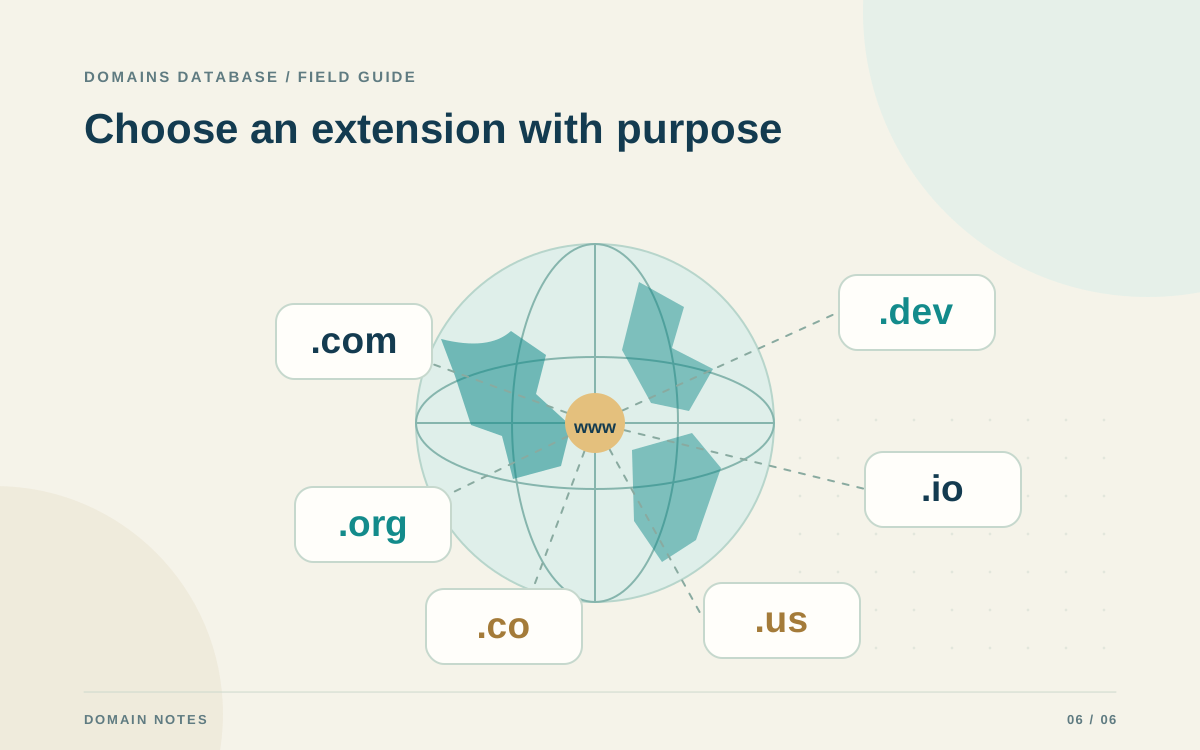
The top-level domain, or TLD, is the final part of a domain name. In example.com, it is .com. People often call this the domain extension. Some registration options use an additional label under a TLD, such as addresses ending in .co.uk. Compare the complete registered address when evaluating choices, because the visible suffix may contain more than one part.
IANA's Root Zone Database lists delegated top-level domains and their managers. It distinguishes categories including generic and country-code TLDs. That directory is useful for understanding who manages an extension, while the relevant registry and registrar provide the actual registration requirements. A suffix appearing in a search tool does not by itself explain whether you qualify to register it.
Compare generic and country-code choices
Generic extensions include familiar options such as .com and .org, along with extensions associated with a subject or industry. A descriptive suffix can make a complete address meaningful when it fits the project. Evaluate whether your intended visitors recognize it and whether you will need to repeat or explain it in conversations, printed materials, or email addresses.
Country-code extensions connect to a country or territory, though some are widely used beyond that association. Their eligibility, registration, and renewal policies can differ. For a website focused on one country, the local extension may be an appropriate audience cue. For a project serving several markets, compare the operational implications of one main domain versus several localized sites.
Understand how extension choice relates to SEO
Google's guidance says keywords in a generic TLD do not provide a search ranking advantage or disadvantage. Choosing a suffix associated with your service can therefore be a communication decision, without treating it as a shortcut to visibility. Compare names on audience comprehension, practical usability, and the website you can build behind the address.
Google also documents country-code domains as a signal of country targeting, with some country-code extensions treated as generic exceptions. If international search matters to the project, read the current guidance for the specific extension and site structure. Language and country are separate concerns: a website in Spanish may serve several countries, and one country may have audiences using several languages.
Review eligibility and ongoing registration terms
Before registering, check whether the extension has eligibility conditions, verification requirements, or restrictions on the name you want. Then compare the registration and renewal terms at the registrar. Ask whether the chosen name has special renewal conditions and how transfers or restoration work. These details are easier to understand before checkout than during an urgent renewal or migration.
For a team, assign someone to maintain the information needed by the registry and registrar. A choice that depends on a particular organization, location, or qualification deserves an ongoing owner. Keep a record of the extension, registrar, expiration date, and recurring cost in your portfolio so you can review the name using actual terms rather than its original promotional presentation.
Test the complete address with your audience
Create a shortlist and compare the full address in realistic settings: a search result, an email signature, a small mobile header, and a spoken recommendation. Ask a few people from the intended audience what they think the site offers and how they would type the address. Listen for assumptions, such as automatically adding a more familiar extension.
A creative combination may work well when both sides of the dot form a clear idea, but make sure the result remains understandable without special formatting. Consider common spelling mistakes and the language your audience uses. Choose an option you can present consistently in your logo, navigation, and messages rather than relying on visitors to remember an unusual explanation every time.
- Read the name and extension aloud as one address.
- Check whether the audience understands the site's purpose.
- Compare eligibility and renewal terms for each finalist.
- Consider the countries and languages the site will serve.
Plan a manageable set of domains
You may decide to register an additional extension or common variant, but give every extra name a purpose. Assign its owner, document where it redirects, and include it in renewal reviews. A large collection of unused variants introduces more administration. Decide which choices reduce actual visitor confusion and which merely reflect a possibility you have not evaluated.
Keep one clearly identified primary website address and document how any supporting domains are used. If you later change the primary domain, plan the site move, email dependencies, and redirects before announcing it. Domains Database can keep the resulting names and renewal records together, while registration and DNS changes remain actions you confirm with the relevant registrar and service providers.