The key takeaway
Choose the name that your audience can remember and use, then confirm its registration details before building around it.
Start with the project, audience, and scope
Before searching for an available domain, write one sentence describing what the website will do and who it will serve. A personal photography portfolio, a local repair business, and an international software product need different naming choices. The sentence gives you a practical filter: a good candidate should support the actual project without requiring a long explanation.
List the words your audience already uses, along with a few distinctive brand ideas. Then decide how much room the name needs to grow. A name tied to one city or one product can be helpful when that focus is intentional, but awkward if the business later expands. Consider that tradeoff before checking which names are available.
Make the address easy to say, spell, and recognize
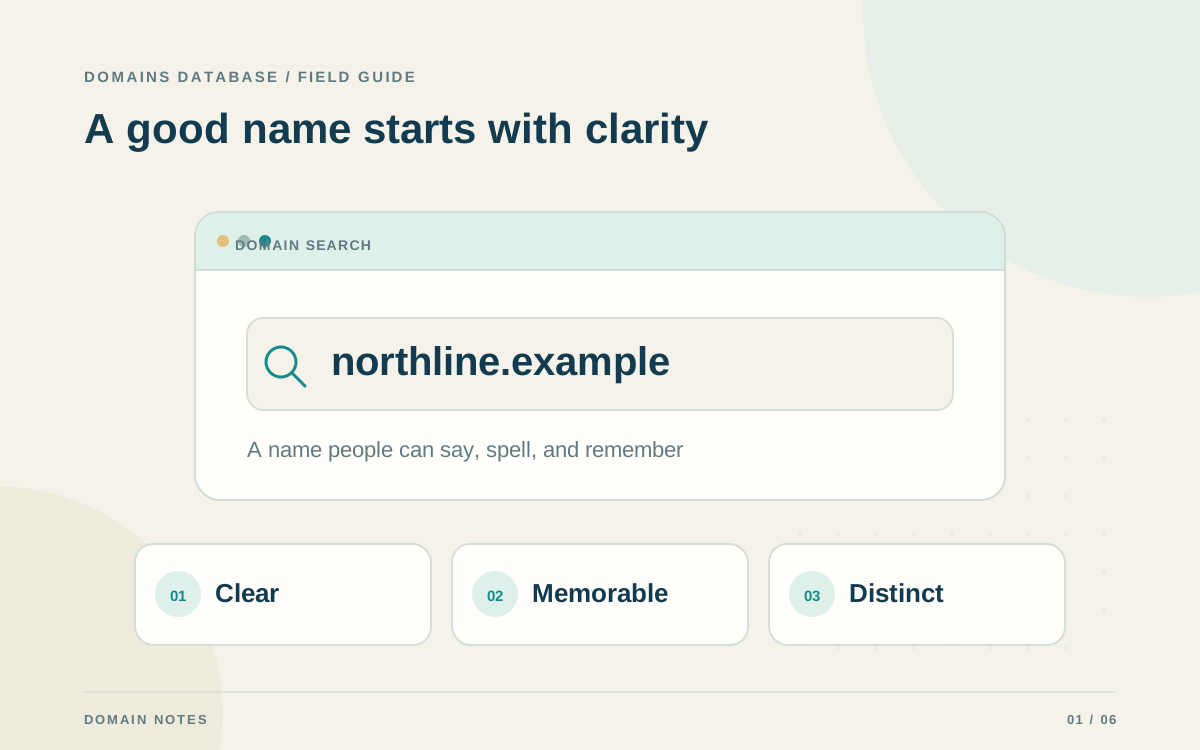
Say each candidate aloud, as if you were recommending the website over the phone. Ask someone to write it down without seeing it. If you must explain a missing vowel, a number that sounds like a word, or several hyphens, the address will require the same explanation from future visitors. A shorter name is useful only when it remains understandable.
Also look at the name in lowercase and in an email address. Two clear words can create an unexpected phrase when joined together. A fictional candidate such as northgrove.example is useful for this exercise: can someone separate the words correctly, recognize the business name, and copy the address without uncertainty? Compare full addresses instead of evaluating the name alone.
Use a small shortlist with consistent criteria
Create three to five candidates and compare them against the same questions. This is more useful than collecting dozens of unrelated names. You can score each candidate from one to five for clarity, memorability, audience fit, and flexibility, but write a short reason beside every score. The reason matters more than a precise total.
For example, a neighborhood workshop might prefer a clear two-word name over an abstract invented word, while a product used across several industries may need a broader brand. Keep these as project-specific judgments. A name that sounds excellent to a founder may still confuse customers who hear it once or encounter it on a small screen.
- Can a first-time visitor spell it after hearing it?
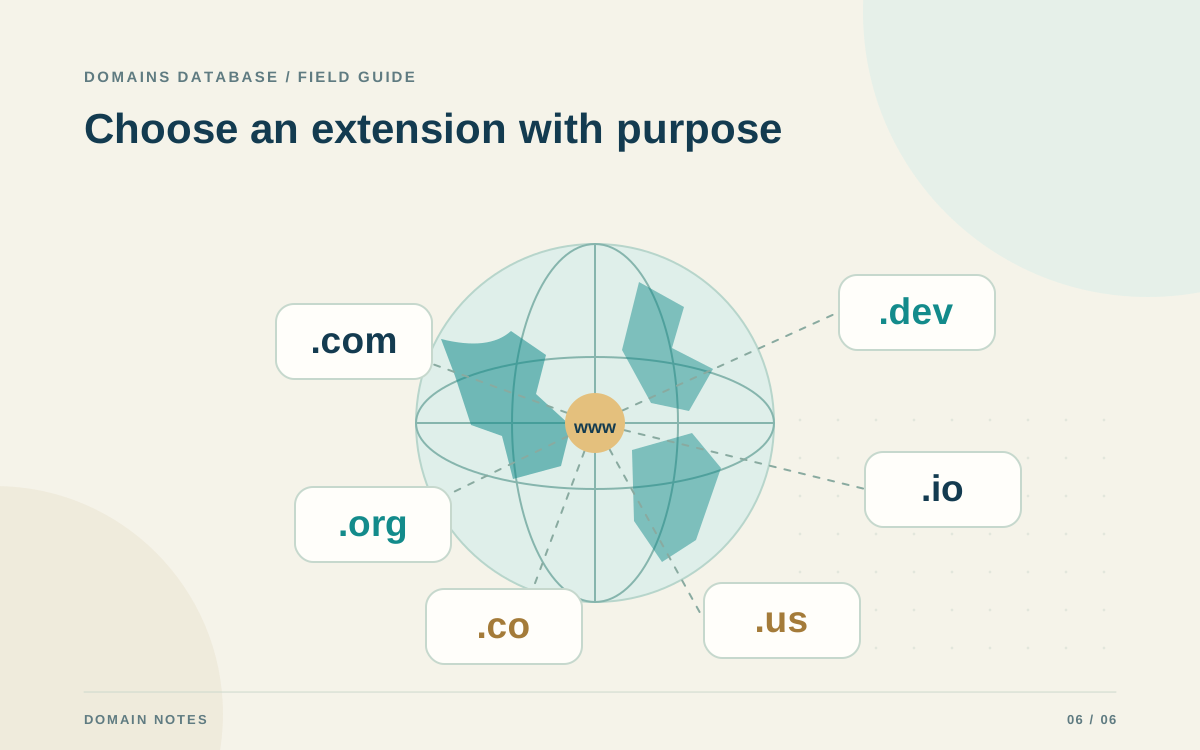
- Does it still make sense beside the chosen extension?
- Will it fit the project you expect to run in a few years?
Check availability, existing use, and registration terms
An available registration is only one part of the decision. Search for existing organizations and products using the same or a similar name, and review the candidate's visible website history when it has been used before. Confusion with an established brand can become a practical obstacle even when a registrar lets you proceed. Pause unresolved naming conflicts before investing in design or launch materials.
For each finalist, read the registrar's registration and renewal terms, the extension's eligibility rules, and any premium renewal conditions. Record the registrar, renewal amount, and expiration date after registering. Availability and checkout details can change, so confirm the final address and terms in the registrar account rather than treating an earlier search result as a reservation.
Understand what a domain name contributes to SEO
A descriptive name can help people understand what a site covers, but it cannot substitute for useful pages. Google describes an exact-match domain system that limits excessive credit for domains matching a search query. A long string of keywords is therefore a weak reason to choose an address that visitors find difficult to remember.
Plan the site around the questions your audience needs answered. Give each important page a clear purpose and title, write content that solves the problem, and connect related pages with meaningful links. Your domain supports this work by providing a consistent identity. It does not promise a ranking position, and a keyword in the address does not remove the need to earn attention.
Finish with a simple ownership plan
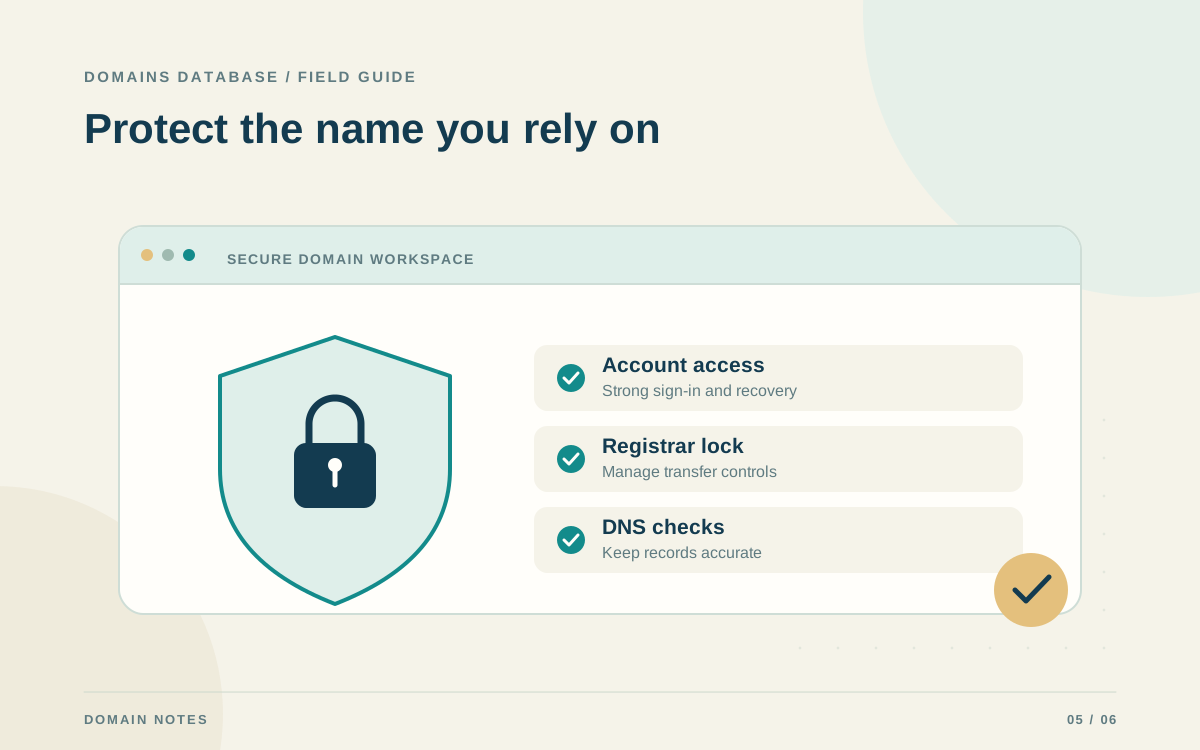
Once you choose a name, assign an owner for the registrar account and a separate owner for ongoing administration if needed. Keep recovery details current, enable the registrar's available security controls, and decide how renewals will be reviewed. This is especially useful when a contractor launches the first version of the site or a team member later leaves.
In Domains Database, you can keep the domain, registrar, owner, renewal date, and yearly cost together, then export a CSV copy. Use that inventory to organize the decision and follow-up work. Registration and renewal actions still happen at the registrar, so confirm the account settings there before considering the new name ready for a public launch.