The key takeaway
Evaluate the name for a specific use case, distinguish evidence from assumptions, and keep domain quality separate from website performance.
Define what you are evaluating
Domain name valuation becomes clearer when you first define the question. Are you comparing names for a new project, deciding whether to renew a portfolio entry, or reviewing a proposed purchase? Those decisions require different evidence. A name can be a strong fit for one organization and a poor fit for another, even when its spelling and extension remain the same.
Separate the domain registration from any website, content, customer relationships, or verified revenue offered alongside it. An address alone does not demonstrate that those additional assets exist or transfer with the name. Write down what is included and what is unknown before comparing alternatives. This guide offers a qualitative evaluation process rather than a monetary appraisal.
Assess clarity, memorability, and audience fit
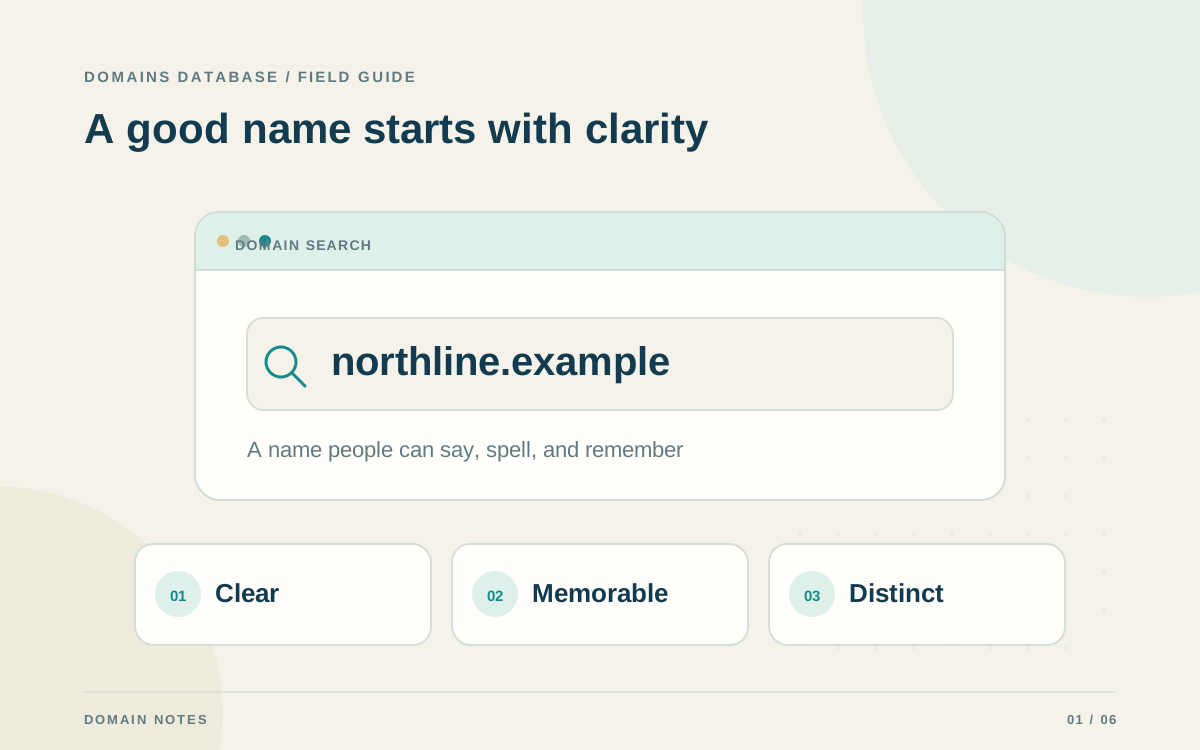
Start with how people will use the name. Can your intended audience pronounce it, spell it, and recognize it after a short encounter? A concise word may be difficult to communicate when it has several plausible spellings. A slightly longer phrase may perform better in everyday use because it tells visitors exactly what to expect. Look for friction rather than a fixed character-count rule.
Consider whether the words match a real product, service, or brand direction. For a fictional outdoor workshop, a clear name connected to repairs could support the customer journey more directly than an unrelated abstract term. For a company with several products, a broader brand might be easier to extend. Record the project-specific reason instead of declaring either style universally superior.
Evaluate the full address and its alternatives
Read the name and extension together. An extension can support the audience's expectations, but it may also require extra explanation or have registration restrictions. Compare the complete address with realistic alternatives you could actually use. Include a fresh brand option, a descriptive option, and a suitable extension choice. This helps reveal whether the preferred candidate solves a meaningful problem.
Record registration and renewal terms for each alternative without assuming an introductory offer represents ongoing cost. Also consider operational complexity: will a name require several defensive registrations, explanation in advertising, or a later rebrand? These are practical planning factors. They help you understand the burden of a choice without turning a subjective preference into a supposedly precise market value.
Review history and verify claims separately
For a previously used domain, review archived pages, current search results, and any available evidence of past use. Look for abrupt topic changes, spam, impersonation, or a reputation you would not want attached to the project. An old registration date tells you about time, not whether the name was well maintained or whether its previous content served readers.
If someone presents traffic, search visibility, or business performance as part of the evaluation, ask for dated evidence and a clear explanation of what is measured. Page performance scores and popularity ranks are different from verified visitor counts. Keep each claim in its own category so a technical metric is not accidentally interpreted as an audience, a customer base, or a guarantee.
Treat comparisons and automated estimates as inputs
Reported transactions and automated appraisal tools may give you ideas about characteristics to examine, but they cannot settle the fit of a particular name. Different buyers have different constraints, and public transaction records may omit context or accompanying assets. An advertised asking amount also reflects a seller's request; it is not evidence that a comparable transaction completed on those terms.
Be equally careful with SEO claims. Google uses many ranking signals and limits excessive credit for exact-match domain names. A keyword-rich address is therefore insufficient evidence of future search visibility. Evaluate the content plan, audience, and implementation separately. If the case for a name depends entirely on an estimate or a ranking promise, identify that dependence before making a decision.
Create a decision worksheet you can revisit
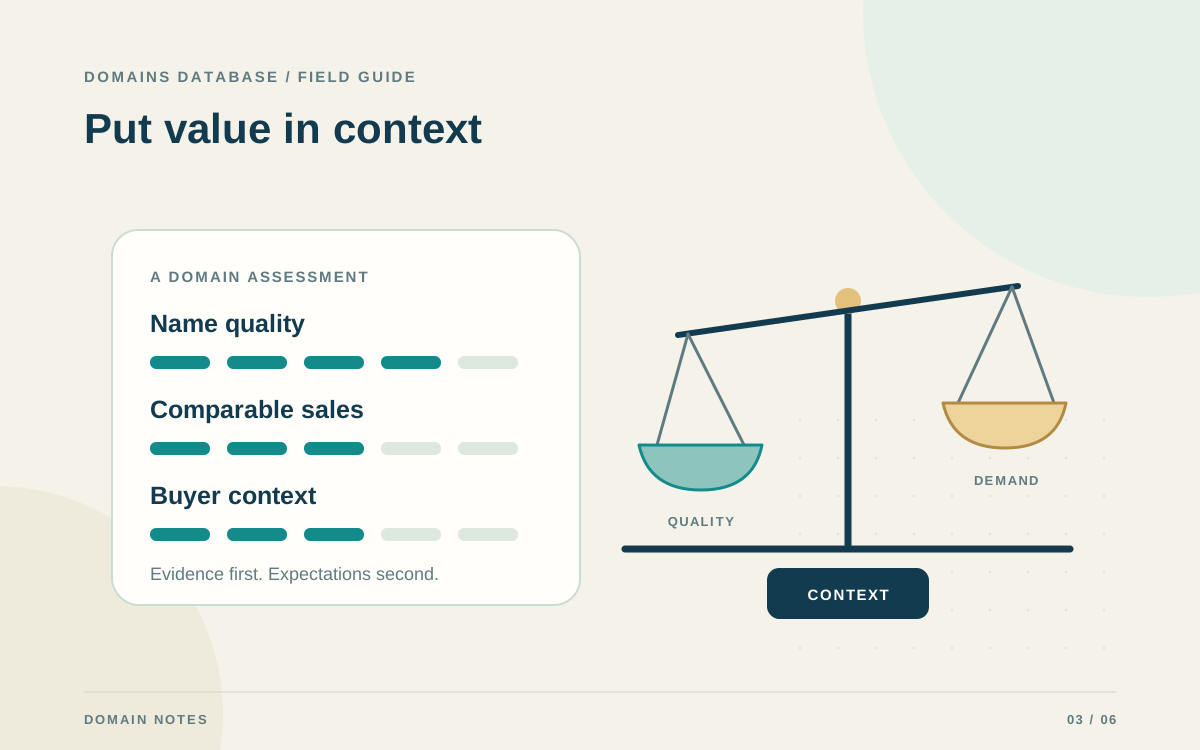
Use a compact worksheet with the candidate, intended use, alternatives, strengths, concerns, and evidence dates. Give each factor a plain-language assessment such as strong, acceptable, or unresolved. Keep the reasoning beside the assessment. A spreadsheet full of scores can appear objective while hiding the assumptions that produced them; a few clear notes are often more useful.
Finish by writing the conditions that would change your decision. You might need clearer ownership evidence, a better understanding of renewal terms, or confirmation that the audience understands the name. Revisit those conditions before committing. For existing portfolio names, the same worksheet can explain a renewal decision and help the next reviewer understand why the name was retained.
- Name the actual project and audience.
- Compare complete addresses and credible alternatives.
- Separate documented facts from estimates and preferences.
- Record unanswered questions and the next action for each.